"For a subject worked and reworked so often in novels, motion pictures, and television, American Indians remain probably the least understood and most misunderstood Americans of us all."

-John F. Kennedy in
the introduction to The American Heritage Book of Indians

Tuesday, March 29, 2011

When Cultures Collide: Even the Rain Film Review

I recently jumped at the opportunity to review the new Spanish film Even the Rain.


Review:

This film follows the fictional Spanish film director Sebastián (Gael García Bernal) as he struggles to shoot a controversial film about the Spanish conquest of the New World.  Moved by the plight of the indigenous Taíno as expressed in the writings of 16th-century Spanish priest Bartolomé de las Casas, Sebastián pens a script that he feels will finally portray Columbus and his Spanish brethren for what they were... brutal, genocidal, conquerors who savagely subdued and forcibly converted the native Taíno population in the West Indies.

The only problem is that the Indians are actually Quechua and the Caribbean is the mountain highlands outside Cochabamba, Bolivia. Such inaccuracies are no mere oversights but rather the brilliant plan of director Sebastián and his film partner Costa (Luis Tosar) to recreate their version of the Spanish conquest on a shoe-string budget.

When a Bolivian government plan to privatize the local water supply leads to popular uprisings, life starts to imitate art. Will the director be able to finish his beloved project or will the very real indigenous uprising playing out before him cause it all to come crashing down?


As Spain's entry in the Best Foreign Language Film category at the 83rd annual Academy Awards, Even the Rain draws on an eclectic mix of talent. Perennial favorite Bernal is his usual high-strung self in the role of the obsessive director Sebastián, the perfect foil to Tosar's rough-edged yet sensitive Costa. Both of them are outshined by first time actor Juan Carlos Aduviri, whose breakout performance as two indigenous leaders, one fighting Columbus and the other the Bolivian government, really sets the film in motion.

The real star of the film however is the script penned by British screenwriter Paul Laverty. Drawing on his first-hand experience traveling through war torn Central America in the 1980s, Laverty creates a tale of filmmaking gone awry that dares to let it's characters waver in morally ambiguous territory right until the end. He injects just the right amount of flawed humanity into the characters to make them and their perilous decisions into a film drama of the highest caliber.


 The final scene of the film within the film  (Source: Examiner.com)

In the hands of less experienced filmmakers, Even the Rain could easily have turned into an overly preachy, hit-you-over-the-head metaphoric tale about the brutal legacy of colonialism. The film makes it absolutely clear that there was and still is great injustice in this "New World." What isn't clear is just what exactly are the protagonists going to do. Finish the film about the historic oppression to only turn a blind eye to the modern injustice or dare to get involved in a very real and deadly conflict?  It is this ambiguity and the subtle and smart ways it goes about answering these questions where the film succeeds.

Few films dare to tackle both the egotistical, money-driven world of modern filmmaking and the high drama of humanity fighting for its most basic rights. Even the Rain does just that. The result is a work whose message is so abundantly clear yet it is so downright gripping to see it unfold.

Daniel (Aduviri) dressed as the character Hatuey shares a moment with the director Sebastián (Bernal) (Source: nytimes.com)


Comments:

Even the Rain does something unique.  Most films about the indigenous people of the Americas are either costume dramas set in a clearly historic past (The Mission, Dances with Wolves) or they are modern pieces about the realities of indigenous life today (Smoke Signals, Frozen River).

Even the Rain deftly combines these two cinematic genres to create some of the most poignant commentary yet seen on film about the enduring tensions between Native and non-Native people.

The irony is not lost on the audience when the supposedly sympathetic Sebastián, so in love with the kind words of Bartolomé de las Casas, snaps at his indigenous actors, practically demanding they complete a critical scene for his film.  In a sense, he becomes a modern Columbus, a man lording over these indigenous actors, using them to propel his own personal creative vision towards completion.

 Sebastián (Bernal) surrounded by his actors (Source: Examiner.com)

On the flip side, Daniel (played by first time actor Juan Carlos Aduviri) is a man committed to his community who just happens to be cast as the historic indigenous leader Hatuey.  Daniel also leads the real-life water riots that rock Cochabamba at the expense of his continued commitment to the film.  Why would a man care about creating some cinematic masterpiece when he and his community are systematically being deprived of their most basic human rights?

This tension between a man obsessed with a film and a man committed to his community not only provides the main drama but the main lesson in the film.

As someone who actively writes and comments about indigenous issues, it was a lesson I took to heart.  I have to be careful not to end up like Sebastián, so obsessed with some high-brow, philosophical, creative endeavour that I loose sight of the real humanity behind the issue.


I give Even the Rain 3.5 out of 4 stars and declare it required viewing for anyone interested in indigenous depictions in cinema or the history of Latin America.


For more on Native films check out this previous Top 10 list:

Forget Avatar: 10 Compelling Films of Real-Life Indigenous Struggles


Note: This review is based on my original review available here:

http://www.movieretriever.com/blog/1076/movie-review-even-the-rain


BLOG NOTE:  Today marks the one year anniversary of Drawing on Indians and what a year it has been.  From Findians to Hipsters, Western Sky to Tribal Chic, it's been a crazy year of cringe-worthy appropriation and thought-provoking activism.

I'm going to take some time off from the blog to focus on other things in my life (job, school, family, etc.) but I encourage you all to check out the other fine blogs featured in the right hand column.  I have a thousand ideas just waiting to hit the page so see you in a few!

<>

Friday, March 4, 2011

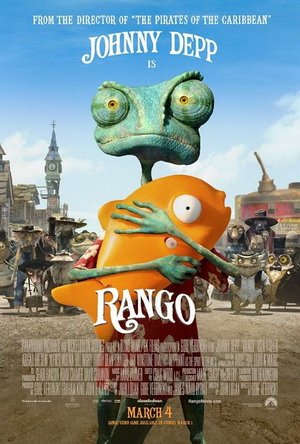
Wounded Bird the "Crow" Indian in Rango

This past week I had the pleasure of attending an advanced screening of the new animated film Rango.

 (c) 2010 - Paramount Pictures (source)


Here's a good plot summary from Wikipedia:


"Rango is a chameleon who lives in a terrarium and constantly seeks to fit in with his surroundings. He finds himself removed from his contemporary American southwest surroundings and ends up in an Old West town in the middle of the Mojave Desert called Dirt, which is populated by various desert critters garbed like characters out of Western fiction. Thinking himself a hero, Rango establishes himself as the town's sheriff, not knowing that people who have held that title do not fare very well in Dirt."


My review for the film is available here.  I gave it 2.5 out of 4 stars:


http://www.movieretriever.com/blog/1073/movie-review-rango


As I write in the review:

"The film plays like a classic Sergio Leone Spaghetti Western crossed with a Nickelodeon kid's comedy with a little Fear and Loathing in Las Vegas thrown in as well. As a Western, the movie has everything from high noon gun battles to bitter fights over water rights to the stereotypical stoic Indian who once again seems incapable of speaking in complete sentences."

That last part refers to the character Wounded Bird.

(c) 2011 - Paramount Pictures (source)


In the film, Wounded Bird plays a bit part as the token town Indian.  He's quiet, mystical, and knows exactly how to track in the wilderness, just like the classic Hollywood Indian.

That being said, he is the source of some comic relief with his one-liners and ends up being a clearly heroic figure in the end.  Then again, the bad pun where Rango refers to Wounded Bird's "ingenuity" only to say "no pun intended" put a bad taste in my mouth.

The official film website over at http://www.rangomovie.com/ includes this description of Wounded Bird:


"A solid creature of the Crow Nation. Wounded Bird draws his inspiration from Native American Indian principles of harmony and quiet observation. His tracking skills are legendary and he's big in Finland for some reason."


I disagree.  Wounded Bird draws his inspiration directly from the scores of Indian depictions in countless Hollywood Westerns.  Rango is filled with every other Western cliche- saloon brawls, corrupt mayors, spineless townfolk, a mysterious stranger- so why not the quiet mystical stereotypical Indian!  It wouldn't be a true homage without one!

Personally, I'm a fan of subverting tired cliches and stereotypes to challenge our expectations and get those cerebral juices flowing.  Rango does just that when the Beans character (voiced by Isla Fisher) subverts the traditional female role to become a gun-slinging, posse riding hero in her own right.

So why couldn't they have done the same thing with Wounded Bird?

 
(c) 2011 - Paramount Pictures (source)


I wonder if writer/director Gore Verbinski ever stopped to think about the Wounded Bird character or simply threw him in as another element in this ode to the Spaghetti Western.  Considering Verbinski made his mark directing the Pirates of the Caribbean franchise, a fine trio of films full of old cliches and stereotypes, this new character shouldn't come as any surprise.  It's just another example of modern Hollywood's love affair with the classic Hollywood Indian, even if he's an animated bird in a kids comedy.

And in case you're wondering, Wounded Bird is voiced by Gil Birmingham.  He is of Comanche ancestry and is best known for his role in the Twilight series.  I haven't heard his or anyone else's take on the character but I'm always open to other thoughts.

<>

Monday, February 7, 2011

Strange Tan Blotches in South Dakota: Indian Reservations in Online Maps

As we live our lives increasingly in the digital realm, the sights, sounds, and moving images of the Internet impact our conception of the world around us more than ever.

Case in point are the myriad of online web mapping services.  What began as simple tools to find directions in the age before Garmins and smartphones have evolved into advanced applications that map multiple layers of data into user-friendly 2D and 3D environments.

But who decides what we see?

As a fan of Google Maps, I became accustomed to one set of data and a visual style that favors brevity and aesthetics over sheer volumes of information.  A few days ago, I happened to click on a link that took me to the Bing Maps website to find a location.  As is usually the case, I ended up scrolling around and exploring the United States.

But something was different...

Here is your standard view in Google Maps:


View Larger Map
Google Maps


And here is that same view in Bing Maps:


Bing Maps


What were just discolored tan geometric blobs* in the first map actually have names in the second map!

Normally, I wouldn't make such a big deal out of mere labels but when you combine the appalling state of America's geographic knowledge with American Indians' long fought battle to reassert their tribal rights and sovereignty, this is a big deal.

Google Maps is the clear market leader among web mapping services but Bing Maps, Yahoo! Maps, MapQuest, and even open collaborative websites like OpenStreetMap are competing for a piece of the pie.  The influence of Google Maps and its visual aesthetic becomes clear however, when you consider it has even garnered its own parody:


Even when you zoom into Google Maps, you never see a single label that identifies those strange tan blotches in South Dakota.  Among the other map services, Yahoo! Maps and MapQuest do label Indian reservations while OpenStreetMap does not.

Thankfully, the Internet has come to the rescue and some enterprising Google Earth enthusiasts asked this very same question.  Independent modders have since created several unique layers that identify and outline Indian reservations throughout the United States.

I can only wonder though, how many people see these very same tan blotches but never bother to answer the simple question- what are they?

National Parks?  Military bases?  Oil fields?

While these mapping tools certainly empower the individual, never forget it is the designers and the developers behind them who hold the real power.  I can only speculate as to why they did not include these labels, but I can be sure of one thing- their decision has impacted millions of Americans and they way understand (or don't understand) the geographic and social reality of this country.


For a great comparison of the overall design of Google Maps, Bing Maps, and Yahoo! Maps check out this informative blog post:

http://www.41latitude.com/post/557224600/map-comparison


*Update:  Google has dropped Indian reservations altogether from Google Maps.  Read about it here:  The Case of the Missing Indian Reservations


<>

Tuesday, January 18, 2011

The Wacky World of TV Tropes

What makes all the mythical, romantic, and stereotypical notions about American Indians so potent and wide spread in modern America?

While there are many answers to this question, one of the most important is simply this: sheer and utter ubiquity.  In almost every form of popular media from television to film to literature to advertising, we are constantly being bombarded with the same creative devices over and over again.  Over time they work their way into our brains and take on a whole new life as tropes.

One of the best websites out there for understanding the power of popular media in shaping the American consciousness is TVtropes.org.  This website is a constantly expanding wikipedia style encyclopedia of tropes from creative works as diverse as video games, theater, music, and new media.  It's tongue and cheek brand of humor and casual tone certainly makes for some entertaining reading.

tvtropes.org

But what exactly is a trope you ask? Here is the working definition from the website:


"Tropes are devices and conventions that a writer can reasonably rely on as being present in the audience members' minds and expectations. On the whole, tropes are not clichés. The word clichéd means "stereotyped and trite." In other words, dull and uninteresting. We are not looking for dull and uninteresting entries. We are here to recognize tropes and play with them, not to make fun of them."


The website includes innumerable examples relevant to Drawing on Indians and I have excerpted some of them here.  Be sure to click on the link and  scroll down to see just how ubiquitous these tropes are across the media world (and feel free to add any new ones):


Indian Burial Ground


"A common cause for supernatural goings-on in America, commonly seen in movies: A house is haunted or Cursed due to being built on an Ancient Indian Burial Ground. The disturbed spirits of the ancients of the land then enact their bloody vengeance against those who wake them by turning off the lights, making hooting noises, creating flies and maybe, if they feel up to it, killing people."


Noble Savage


"A character who is portrayed as nobler or of higher moral fibre than the norm, due to their race or ethnicity, which is that of a barbaric or savage tribe. (Often regarded as living the Good Old Ways). The savages in question are quite often American Indians, so you could probably call them Mary Sioux. Rare nowadays, except as a Sci Fi alien- though it has made something of a comeback with the idea of Magical Native American people being more in tune with nature than the greedy white people."


Going Native


"There are plenty of people who believe that modern life is rubbish and would like to escape it and go live off the fat of the land. The Going Native trope plays to this fantasy by having a character lifted out of his typical environment and thrust into a new one, only to become a part of that new world. "


Injun Country


"American Indians (also Red Indians, Native Americans, Amerinds, or First Nations) discovered America by walking across a gigantic land bridge from Russia into Alaska. For a few thousand years they just took up space until Europeans rode massive wooden buckets across the ocean and crashed into the eastern shore. After a friendly 'getting to know you' dinner party, the killing started, and lines were drawn between the Civilized World and Injun Country."


Magical Native American


"After centuries of various atrocities (smallpox, Columbus, Custer, the Trail of Tears) perpetuated against "the savages", white people finally came to realize that Native Americans have rich identities and cultures. Furthermore, Native American tribes have their own rich and varied beliefs, many of which hold close to the idea of the value of everything on the earth...Of course, many non-Natives, especially those Hollywood types, saw a complex faith with a focus on ritual and spirits and broke it down to "magic." So, whenever someone needs to bring in a spirit guide, or magical superpowers, they bring in the Magical Native American."


Badass Native


"Indigenous people tend to be, well, poor. Indigenous people also have a tradition of war, unlike the rest of the world. So of course they're badasses. No matter what era, you're in, if you live in the United States, Canada, New Zealand, or Australia, indigenous people will be badasses. Rarely seen in the rest of the world, though. The American version of the Badass Native has costuming and prop elements as well. Note that this is Always Male, will often be magical. Overlap with Noble Savage."


 Mighty Whitey 


"A common trope in 18th and 19th century adventure fiction, when vast swathes of the world were being explored and properly documented by Europeans for the first time, Mighty Whitey is usually a displaced white European, of noble descent, who ends up living with native tribespeople and not only learns their ways but also becomes their greatest warrior/leader/representative. Extra points if he woos The Chiefs Daughter along the way."


The Chief's Daughter


"Even in Darkest Africa, Injun Country, or the land of Wild Samoans, Everythings Better With Princesses. The Chief's daughter, in her Fur Bikini or Braids Beads And Buckskins, is often the first to greet or trust Mighty Whitey during his visit to the strange new land. She'll be inexplicably beautiful by Western standards with just enough racial traits to be exotic, and will be a Noble, Nubile Savage compared to the rest of her Barbarian Tribe, and a Friend To All Living Things."


Mayincatec


"Under Hollywood History, all historical Central/South American nations are lumped into one exotic and barbaric people: the Mayincatec, featuring aspects of the Maya, Inca and the Aztecs, plus many others. It's a salad of exciting bits from all their histories, with a topping of myth and fiction. And the dressing is blood."


Want to see these TV tropes in action?  Well, there isn't a better example out there than the famously flawed 1995 Disney animated film Pocahontas.

One of the best critiques is from regular TVtropes.org contributor The Nostalgia Chick.  Her silly comments and sharp wit add a touch of humor to what could otherwise be a very dry subject.  She also created a video critique of Pocahontas which you will find below:


Part 1 of 2:


Part 2 of 2:  (scroll ahead to 3:38 for the most disturbing Disney movie line ever)


To conclude as only The Nostalgia Chick can:


"And hopefully now we're all a little less educated on our own history. And the movie leaves us with questions like, 'Why are there moose in Virginia? Where did all those majestic cliffs go in the interim 500 years? Why doesn't listening with one's heart bridge language gaps anymore? Why does Pocahontas lack a real nose — was she really fathered by Lord Voldemort?' Really, it's best not to think about it — the great mouse in the sky certainly doesn't want you to."


For more on Pocahontas, check out this previous post:

Portraying Pocahontas: or the Not-So-Modern Origins of the "Sexy Indian Princess"


 <>

Wednesday, January 5, 2011

Hunting the Rez Magazine

 I stumbled on a fascinating new magazine called Hunting the Rez


"Welcome to Hunting the Rez Magazine, a magazine that is written with the non-enrolled sportsman in mind. Hunting the Rez is a quarterly publication, its aim is to provide the general public with a directory to 52 million additional acres of hunting and fishing opportunities right here in the United States. With hunting grounds getting harder and harder to find due to a myriad of reasons, we believe that Indian country is the biggest best little secret hot spot for sportsmen all across the globe."


The magazine provides all the essential information for the sportsman looking for that unique hunting or fishing trip that one cannot get on other lands.  The website notes many of the unique benefits of planning your next trip in Indian Country...


"...for example; many tribes have rifle seasons during bugling season as opposed to the states. Some tribes even offer extended seasons for non-enrolled sportsmen.

Many tribes are reintroducing animals on our respective lands, such as wild turkey, big horn sheep, buffalo and moose, a management strategy that serves as a base from which we can build and sustain a renewable natural resource."


The magazine especially emphasizes the quality experience available only through sound management techniques:


"Native American tribes have the resources and management means to realize the responsibility that stewardship of these lands carry and work with wildlife biologists for quality game management, and are implementing sound strategies for protection and promotion of resident wildlife."


If done right, I think this magazine and the resulting interest in hunting and fishing on tribal lands for non-enrolled members could prove a great new source of income and job creation for the tribes.  It's certainly a different crowd than the casino folks!


I especially appreciate the design of the magazine as it clearly steers away from any stereotypical Indian symbolism or design.  The magazine is professionally done with its focus squarely on hunting (albeit on tribal lands).  This is probably due to the fact that it is published by Jason Belcourt from the Rocky Boy Indian Reservation in Montana.

This is in stark contrast to many of the survival schools I profiled here:


Cody Lundin and Surviving like an Indian


Many of these schools are run by non-Natives who liberally sprinkle Native symbolism and spirituality throughout their programs and websites.  Then again, I think these schools attract a different crowd than the high-end sportsmen group.  Your average primitive living enthusiast or survival skills junkie would probably prefer a more rugged, earthy adventure in the outdoors than what I expect Hunting the Rez magazine promotes.  (But maybe I'm wrong)

As I argued in the "Cody Lundin" post, it's often hard to gauge the motivations of anyone who appropriates Native skills, culture, or spirituality.

A good example of how to appreciate Native skills in the outdoors is this article:


Native Americans Designed First ''Deer Drives''


It is a straightforward piece that describes Native corralling techniques for hunting deer.  It makes distinctions between tribal groups (Menomoni, Iroquois, "some western tribes") and doesn't indulge in any fluff language about Indians "living in harmony with the land" or their "superhuman" hunting skills.  It could make mention of modern Native hunting techniques but the piece does make it clear it's looking at historical trends.  Otherwise, it's a great informative piece that puts it all in perspective when it says:


"Much of what we use today in our tactical strategies to drive deer we have learned from the first Americans... I think our knowing how this hunting technique of man-drives has evolved is important. It's another part of the rich history of the sport of deer hunting."


<>