"For a subject worked and reworked so often in novels, motion pictures, and television, American Indians remain probably the least understood and most misunderstood Americans of us all."

-John F. Kennedy in
the introduction to The American Heritage Book of Indians

Friday, October 12, 2012

An Early History of Stanton

Image location

Welcome to Stanton - Population 350 (give or take a few dozen) - The county seat of Mercer County, North Dakota.

I arrived in this humble town in the spring of 2009 to begin a seasonal position as a park ranger at Knife River Indian Villages National Historic Site.  Created by an act of Congress in 1974, the park preserves a series of Hidatsa Indian earthlodge village sites immediately north of town.

Over the course of three seasons, I learned much about the history of this place: the arrival of paleo-Indians, the development of agriculture, the lifestyle and culture of the Hidatsa people, the arrival of white traders and explorers, the trauma of smallpox, the abandonment of the villages.

But I never learned much about the history after the abandonment of the last traditional earthlodge village in 1862 until this past summer.  Hearing anecdotal stories of local residents digging for artifacts in the Indian Villages and uncovering human remains while simultaneously staging pageants that celebrated the local indigenous history, I was inspired to dig deep into the more recent history of this place.  The history of Stanton, North Dakota.

(For a more thorough background of the indigenous history of Stanton, check out the Knife River Indian Villages website- http://www.nps.gov/knri/historyculture/index.htm)


Once Abandoned, Never Forgotten

The rich bottomlands at the confluence of the Knife and Missouri Rivers supported a unique semi-sedentary agricultural lifestyle for hundreds of years.  The Hidatsa Indians flourished in the region building permanent earthlodge villages with populations in the thousands.  They traded over vast distances and amassed power, wealth, and influence over a wide swath of what is today the state of North Dakota.

After a century of contact with white traders, explorers, and artists, the last group of Hidatsa left their aboriginal homeland in 1845.  The dual impacts of disease and warfare had decimated their numbers and forced this move forty miles upriver.  There they founded Like-a-Fishhook village, their last traditional earthlodge village.  Two other sedentary tribes, the Mandan and Arikara, left the Knife River area as late as 1862 to join the Hidatsa at Like-a-Fishhook.

Only twenty years later on December 4, 1882, Thomas and James McGrath settled near the Knife River and opened a post office that they promptly named after their mother.  With this simple action, the town of Stanton was born.

But the former residents of this area were not truly gone.  Their centuries long existence on the land left deep marks in the local geography.

(c) National Park Service
Many a settler found an odd piece of land on their property that might appear strange to modern eyes but they knew exactly what it was.  It was an Indian Village or more often the "Indian mounds" as they referred to them.  Fully aware that they were settling on recently emptied land and not empty land, these first settlers nonetheless moved forward and scraped a hard living out of the land.

And the history of this place was also born out of the everyday encounter between settler and Indian.  The Hidatsa had only ever moved forty miles up the river onto land that eventually was designated the Fort Berthold Indian Reservation.

But a reservation boundary is a poor barrier for a people accustomed to traveling to hunt, trade, and socialize.  As early settler David Juzeler remembered in a 1930s interview:

"The native inhabitants, the Indians, of course, were here.  They stayed away from the settlers.  However, they did go to Hebron and enroute camped on Spring Creek near Juzelers and near Walkers on the Knife River."

Another early settler, Henry Hovdet hints at the tense relationship between the communities:

"Indians on the Fort Berthold Reservation were very friendly towards the white men and would do nothing to harm them if they were treated right.  And all the white men gave in to the Indians in order that they might get along without trouble."

Gottlieb Heihn gives us an example of this process at work:

"in november 1898 a wagon load of indians were caught in a snow storm coming from Hebron, one of their horses played out and died one half mile west of the homestead, and the indians came to the Heihn place for shelter, they stayed in the barn with the horses and cattle for two days and nights, till the blizzard let up so that they could travel, Mr. Heihn gave them one of his horses so they could get home which was still about fifteen miles north to the reservation, they returned the horse the following week, and to show their appreciation the Heihn's were presented with a big piece of frozen deer meat, and an indian made a shawl for Mrs. Heihn and they thanked the Heihn's many times for the use of the horses."

But encounters were not always rosy.  Take the case of August Borner:

"one day Mr. Borner left his file at one end of the field while making around and a couple of Indians riding by on horseback thought this file might be useful to them, so they picked it up and took it with them.  As was customary with pioneers in those days Mr. Borner carried a gun with him... Mr. Borner thought the only way to get his file back was at the point of a gun.  So after them he went, but as he reached the top of the hill and looked over he saw there were more than just two Indians.  There were about twelve or fifteen tepees, so Mr. Borner thought it better to lose a little file than to maybe lose his scalp."

In essence, these two communities, one indigenous and one recently arrived, were fully aware of the other.  Whether you lived on the reservation boundary, amid the remains of a village site, or tucked away in some remote homestead, the indigenous history of this area was still very much an indigenous reality.


The Turn toward History

But something began to change in the first decade of the twentieth century.  The indigenous history of Stanton was put to use.  Not to commemorate or educate but simply to boost.

At the North Dakota State Industrial Exposition in 1911, Mercer County declared itself "Majestic Mercer."  Stanton Commerical Club secretary C. F. Schweigert set up a booth full of vegetables and grains he had personally driven 70 miles overland from Stanton to Bismarck, the state capital.

The showpiece of the booth was the corn.  As The Bismarck Tribune wrote: "Majestic Mercer's long suit seems to be corn and judging from the entries made, some of the big corn prizes will go west of the Big Muddy to the banks of the Knife."


Left-Click on the image and then Right-Click to select View Image to read the whole article excerpted below

The St. Paul Pioneer Press, The Bismarck Tribune, and The Fargo Forum all reported on the Majestic Mercer booth and what they report is practically an identical history of corn in Mercer County.

St. Paul Pioneer Press:

"In this country corn was raised in 1805.  That is 106 years ago there was corn growing on land which is now part of Mercer County.  Lewis and Clarke (sic) in their expedition to the Pacific coast record that they bought corn of Indians... Later visitors to the Mandan Indians in that vicinity report corn, and it has been developed during the 26 years white men have been there, until it is a well known variety.  This year fully 1,500 acres of corn has been raised there, running 25 to 50 bushels to the acre."

The Bismarck Tribune:

"It is not generally known that corn was raised successfully in the Missouri valley long before the white man came to Dakota.  The explorers Lewis and Clark found a goodly supply of corn as the Ree and Mandan villages at Stnaton as early as 1805.  For many years thereafter these villages supplied the trappers and traders with corn.  One of our present varieties known as "Mercer" is the improved Ree or Squaw corn."

The Fargo Forum:

 "No one knows when corn was first raised in Mercer county, but history records the fact that the Mandan Indians cultivated it years before the famous explorers, Lewis and Clark, visited their villages which were located near Stanton... Again we hear of corn raising in Mercer county through Catlin who visited the Indian villages near Stanton in 1832... It was not until 1880 that the first white families came to Mercer County; whom was Edward Heinemeyer... [He] made a special effort to raise corn the first year, but did not succeed until he had secured seed from the Mandan Indians... That crop was the foundation crop of the variety known as "Mercer Flint."  Today, after twenty-seven years of experimenting and improving this variety, Mr. Heinemeyer has a corn that can compete with any corn grown in this state as to size and quality."

What does this all mean?  Considering all these articles give a near identical take on the history of corn in Mercer County and the reporters are unlikely to have such a thorough and intimate knowledge of this history, I am confident all this information came form the Majestic Mercer booth itself.

This means residents of Mercer County were not only aware of the long history of interaction between natives and non-natives but saw themselves as directly connected to that history in 1911. 

After all, famed explorers Lewis and Clark found corn growing at the villages in 1805 and Edward Heinemeyer who pioneered the modern variety of "Mercer Flint" was still living in Stanton in 1911.

But here is the funny thing.  Most of the settlers of Mercer County were not only newcomers to the county, they were newcomers to the continent!

Edward Heinemeyer was born in Buckeberg, Germany.  Another early pioneer of Mercer County, August Borner, was born in Berlin, Germany.  Even C. F. Schweigert who set up the Majestic Mercer booth had only arrived in the United States in 1900 from Germany.

How much did a German immigrant in the 1880s or 1890s really have in common with earlier arrivals in the Knife River area like Lewis and Clark or George Catlin?  And why then was there a concerted effort to talk up the unique history of this area, especially Lewis and Clark?

This is just the first of several prominent examples of both the settler population and the Three Affiliated Tribes specifically drawing upon the earlier history of this area.  They did it for different reasons at different times but one thing is for sure.  History matters, but the power to write, revise, and make true a history is what truly matters.


Note: The pioneer quotes are from The Pioneer Biography Files (Series 30529) courtesy the State Historical Society of North Dakota
<>

Friday, September 28, 2012

A Tale of Two Photos


"You will excuse me if I say that the members of the tribal council will sign this contract with heavy hearts.  With a few scratches of the pen, we will sell the best part of the reservation.  Right now the future does not look too good for us."

- George Gillette, Chairman of the Tribal Business Council of the Three Affiliated Tribes upon the signing of legislation that handed 152,360 acres of reservation land over to the Army Corps of Engineers to be inundated by the reservoir of the Garrison Dam

George Gillette covers his face as the legislation is signed. AP Photo - May 20, 1948

With a simple stroke of a pen, life changed forever for the Three Affiliated Tribes.  The Mandan, Hidatsa, and Arikara people had all moved up the Missouri River, farming the rich soil of the river bottoms and hunting bison as they went.  The dual impact of disease and warfare decimated these three communities but also brought them together in the nineteenth century.  From these pieces, they built a prosperous life on the Fort Berthold Reservation in northwest North Dakota.  It was a model of Native self-sufficiency and cultural strength.

The Three Tribes bent but they did not break.

That began to change in 1944.  The Flood Control Act of that year called for a massive series of dams to conserve, control, and make useful the waters of the Missouri River Basin.  The Army Corps of Engineers drew up plans for Garrison Dam, a massive earth filled dam immediately downriver from the Reservation.  The Three Tribes voiced their opposition, petitioned for a different plan, but the tide of progress and bureaucratic machinery was simply too much.

On May 20, 1948, the Three Tribes accepted an agreement that no one liked.  Ninety percent of the population on the Reservation would have to relocate away from the river.  Entire towns would be lost.  All of the good farming land and timber resources would be underwater.  And their emotional and spiritual ties to the Missouri River would be severely tested.

Even Secretary of the Interior Julius Krug admitted "This contract does not cover what these people have lost and further action is needed."  Further action would indeed come but not until long after an entire community was physically, culturally, and spiritually uprooted.


But just downriver things were a little different...

"Lewis and Clark Pageant Cast" Hazen Star - February 24, 1955
The town of Stanton, North Dakota was booming.  The construction of Garrison Dam brought much needed jobs and money to this modest farming and ranching community.  New businesses opened on main street and residents enjoyed a quality of life they had never experienced.  The future looked very good for Stanton.

The town began its life like many other small North Dakota towns.  Mainly German immigrants arrived via the Northern Pacific Railway to claim their individual 160 acre homesteads on the vast prairie of Dakota Territory.  Some of these settled in a wooded area at the confluence of the Knife and Missouri Rivers and named it Stanton in 1882.

But the town of Stanton is different.  These immigrants did not actually settle the land but in fact re-settled the land.  Immediately outside the city boundary stand the remains of half a dozen Mandan and Hidatsa village sites.  It marks the last place they lived before their move onto the Fort Berthold Reservation.

For the "re-settlers" of this area, it was famous for another reason.  Lewis and Clark, the pioneering explorers of a young American nation, spent the winter of 1804-1805 just downriver from the Indian villages.  They traded and talked diplomacy and sought assistance for their journey ahead.  They met Sakakawea (Sacajawea), a young Shoshone girl who in the next century and a half would become a figure so mired in myth, legend, and downright fantasy, that an honest appraisal of her life is a task fraught with controversy.

But in 1955, any controversy was set aside to celebrate and commemorate this local heroine and the Indians who helped these explorers.  The Lewis and Clark Pageant was a community production.  Men and women, young and old sewed costumes, painted backdrops, and rehearsed their roles as Indians and explorers.  It was an opportunity to experience a simpler time, as pageant director Edith Janssen wrote:

"One hundred and fifty years ago the Indians trod the soil where Stanton now stands.  They had no worries of taxes, income tax due next March; Bank accounts; Gasoline bills; H Bombs or the new school to be paid for.  They had no woes of civilization.  They reaped good harvests, as the soil was very rich.  Hunting and fishing was excellent and the river water pure.  They were content."

On their own, such comments can appear detached or naive.  In light of the tragedy the Three Affiliated Tribes just experienced with the Garrison Dam, they are ironic, even cruel.

But this is not simply a story of cultural appropriation or Native injustice.  History is always more complicated.  The relationship between the Three Affiliated Tribes and the community of Stanton is marked as much by friendship and generosity as by indifference or naivete.

Over the next several months, I will be exploring the relationship of these two distinct communities.  I will touch on race, gender, representation, historical memory, land issues, authenticity, colonialism, and cultural sovereignty.  I do not know exactly where this journey will take me, but I encourage you to join me and find out.


<>

Friday, September 21, 2012

Canada... It's Different Here

So after a long absence from the blogging world, I have decided to return and embark on a new project in the wide world of indigenous appropriation and representation.

But first, the absence.  Just over a year ago, I moved to the beautiful city of Vancouver, British Columbia but not for the scenery or the recreation or the culture.  I arrived to better understand what I have been doing on this blog over these past three years.

I am currently pursuing a Master's Degree in the Department of History at the University of British Columbia.  After a year of coursework and a summer of research, I am finally writing my thesis but more on that later...

...because I wanna talk about CANADA!

beavers and mounties and maple leafs oh my!!!


Canada really is a different place.  People queue up in perfectly straight lines to get on the bus.  The road signs are in something called "kilometers per hour."  The money comes in funny colors other than green.

And there is subversive indigenous pop art on every street corner!

Wait... what?


You read that right.  Subversive indigenous pop art.  How else can you describe the above sign that skewers the colonial power structure with its blunt reminder that some people living here are indeed guests.  This is just one of a series of signs located on the University of British Columbia campus.  Every one includes the name of a different indigenous community serving as host.

Or perhaps you'd prefer something with a little more pop...

Enjoy Coast Salish Territory by Sonny Assu

Indigenous artists like Sonny Assu may use humor in their work but they have not forgotten one thing- indigenous issues are serious business here in Canada, especially in British Columbia.  The recent protests by the Musqueam over a construction site located on burial grounds is only the latest example.

As an American from the Midwest, it is especially jarring.  Where I come from, Native people are most visible as mascots, monuments, and media figures but the situation is really no different than in British Columbia.  Native communities and cultures in the United States are still around and acting as host in the city, in the country, really everywhere.

So like so many things, it all comes down to a matter of perception.  Making some people, places, things invisible when they are in fact staring you right in the face.  And this is by no means a recent phenomenon.

Over the next many months, I will be using this blog as a medium to explore this issues of memory and representation.  My research takes me to the state of North Dakota and I would like to extend a hearty welcome to anyone who wants to join me on this journey.  As always, I welcome all feedback as it will only make me think harder and write better.

Till then, I would like to leave you with an image to be explored later:

State Historical Society of North Dakota (2011-P-011-01)

Monday, October 10, 2011

Happy Indigenous Peoples Day!

I hope everyone has an awesome Indigenous Peoples Day.  It only seems like yesterday that our pioneer ancestors landed on the shores of BabaKiueria and learned to peacefully coexist with the local pale-skinned population.

Enjoy!


<>

Thursday, July 7, 2011

Reel Injun and other Native Responses to "Indians" in Mass Media

Reel Injun is a new documentary film that explores the phenomenon of the Hollywood Indian. For over 100 years, Indigenous North Americans have appeared in more than 4000 films.  Cree filmmaker Neil Diamond explores the many depictions of Indians on celluloid and its impact on every filmgoer's understanding or misunderstanding of Native people.

I caught an abbreviated hour long version of Reel Injun on Independent Lens- the award-winning public television series that highlights new drama and documentary films.  I was very impressed with the film and its humorous and poignant insights into the Hollywood Indian.

The most impressive part of the film is its portrayal of Native actors and filmmakers in the earliest days of cinema.  From the silent era through the first talking films, Native people had a surprisingly active role in film production.  It seems only when the studio system became dominant that real Native people took a backseat role (if not wholly disappeared).


Reel Injun proves that one of the most effective ways to examine and question Indigenous depictions in mass media is with mass media itself!  And so long as there have been these Indigenous depictions, so have there been Indigenous people ready to counter them.  Here are a few of those:


Eska Water's new ad campaign: "Eskan Warriors"

Mohawk activist Clifton Nicholas expresses his dismay over a new ad campaign for Eska Water.  It depicts a fictional band of "Eskan Warriors."  According to Nicholas, these ads depict a negative portrayal of Native people even if it is a fictional generic "Native" group.


Time for "THE INDIANS SHOWBAND" to retire!


The Irish showband "The Indians" who perform in stereotypical Indian garb and perform songs like Wigwam Wiggle and Squaws along the Yukon have met their match online.  A protest group on facebook is calling for the group to retire saying they make a mockery of native culture through their stereotypical representation of Native Americans.
 
https://www.facebook.com/event.php?eid=110714922354367

Here's Wigwam Wiggle:


AIM Santa Barbara takes on The Dudesons

Way back in May 2010, I broke the story about the new MTV show The Dudesons and their tasteless depiction of American Indian culture in the episode Cowboys and Findians.  Here is part one of a three part series of young AIM activists discussing their concerns about The Dudesons.


Ask an Indian: Cultural Appropriation

Simon Moya-Smith is an Oglala Lakota Sioux journalist and activist who describes himself as a "rug lifter" trying to reveal the many American Indian issues swept under the rug.  He blogs over at http://iamnotamascot.blogspot.com/ where his passionate commentary is always good for a hearty laugh and thoughtful reflection.  Here he is decrying Native appropriation while window shopping.


The Stream - Don't Trend on My Culture - Adrienne Keene

Adrienne Keene is a Cherokee blogger and activist who analyzes a constant stream of Native cultural appropriation over at her blog http://nativeappropriations.blogspot.com/.  Thanks to her prodigious efforts at tracking this phenomenon, she is making appearances in more mainstream media such as this interview on The Stream on Al Jazeera English.


Dr. Greene's AB-original Pain Reliever

And finally here is Oneida actor Graham Greene with a humorous take on Native appropriation in marketing.  Enjoy!


Additional reading:

Reel Injun Discussion Guide

Hollywood's Indian: The Portrayal of the Native American in Film. Edited by Peter C. Rollins and John E. O'Connor.  University of Kentucky Press (2003).

From Drawing on Indians:

Drawing on Indians: The Wacky World of TV Tropes

Forget Avatar: 10 Compelling Films of Real-Life Indigenous Struggle


<>

Friday, July 1, 2011

UPDATE: Indian Reservations are back in Google Maps... but for how long?

Thanks to some proactive internet users and followers of the blog, American Indian reservations once again appear in Google Maps!

Google employee DMabasa wrote the following response to a question posted in the Google Maps help forum:


Hi all,

Thanks for voicing your concern. We are aware of this issue and working hard to get it fixed as soon as possible!

Daniel


Apparently by as soon as possible he means immediately because take a look:


It appears to be fairly thorough but a quick search did prove that at least one reservation is missing (sorry Three Affiliated Tribes, apparently Google doesn't like you).

I am happy that Google returned to the status quo of marking Indian reservations but the names are still missing.  What's the point of identifying something if you don't also label it!

If Bing Maps can label Indian Reservations then so can you Google!


to be continued...


For the original story check out this post:
The Case of the Missing Indian Reservations

or my post from Sociological Images:
Native American Reservations, Representation, and Online Maps


<>

Tuesday, June 28, 2011

Indian Voices: Listening to Native Americans Book Review

I recently reviewed the new book Indian Voices: Listening to Native Americans by Alison Owings.

Read my review from the Bismarck Tribune below:


Native Americans tell their stories in book

Title: “Indian Voices: Listening to Native Americans”
Author: Alison Owings

While driving along an unremarkable two-lane country road, Alison Owings passed a simple road sign that caused her to stop. It read “You are Entering the Navajo Nation.”

As a best-selling author from New Jersey, Owings thought she knew America, but her short jaunt through rural Arizona made her realize just how much she did not.

Shocked and compelled by her own ignorance about Indian Country, Owings set out to write the book her exhaustive library search proved did not yet exist.

“Indian Voices: Listening to Native Americans” unfolds as a series of chapter length interviews with tribal members from across the United States. In these candid discussions, Native Americans of all backgrounds reflect on what it means to be Native in America today.

From the Passamaquoddy blueberry harvester to the Yup'ik educator to the Lakota woman's activist, Owings travels far and wide to converse with her subjects. Stories of hardship and survival, humor and celebration, tradition and modernity are told by the likes of an incarcerated Yurok artist, female Osage lawyer, and Lakota/Navajo urban activist.

Even the most hot-button issues are not off limits; Indian mascots, repatriation of remains, tribal corruption, and spousal abuse all make appearances.

Owings' writing can be summed up in one word: enthralling.

Her vivid prose and penchant for lengthy block quotes bring the scenes and stories to life in vivid detail.

“Indian Voices” has the feel of a documentary film with the camera fixed squarely on the subject.

Owings' musings as the wide-eyed outsider, however, can awkwardly break up the narrative. Indeed, at one point, I found myself wondering if a better subtitle for the book would have been “Listening to Alison Owings Listen to Native Americans.”

Overall though, Owings succeeds in recreating the sense of intimacy she herself must have felt during these long interviews.

The best part about “Indian Voices” is the sheer range of thoughts, feelings and opinions elicited from her subjects; a true reflection of Native America if there ever was one. Even among families, differences exist.

Take the case of Emma George, Lemhi Shoshone and closest known blood-relative of famed Lewis and Clark guide Sakakawea. Emma was always reluctant to acknowledge her famous kin unlike her two sisters who enthusiastically took part in bicentennial activities.

While this book only scratches the surface of America's varied Indigenous communities, it is a welcome addition to the very scant literature on Indian people today.

In addition, while her writing is clearly aimed at a non-Native audience, I feel “Indian Voices” would be a compelling read for both Native and non-Native readers alike. Universal themes of pain, hope, and humor abound.

Having now heard so many truly unique and original voices, I can honestly say I will never look at Native people and culture the same way again. Such is the power of giving one community the opportunity to speak so candidly with the world.


For readers of Drawing on Indians, Owings' subjects make numerous references to challenging Native stereotypes and confronting America's often awkward relationship with Native America.

These individuals provide just the perspective most people lack when dealing with issues of Native cultural appropriation- the Native perspective!

Look!  Smiling and laughing Indians!


You can read some excerpts from the book on Indian Country Today:

http://indiancountrytodaymedianetwork.com/2011/04/indian-voices-loud-and-proud/


<>

Saturday, June 18, 2011

Going Native in Ireland Part II

It's one thing to find a single product in a store that appropriates Native culture but to find an entire business...

Meet Apache Pizza!


Ireland's most popular Native American themed dine-in and carry-out pizza restaurant!

This popular pizza chain with over 40 locations throughout Ireland left me scratching my head just like the Irish Indian Chief Headdress.

Some of the menu highlights include:

  • WIGWAMMER pizza  (cause nothing screams woodlands tribes like double decker pepperoni!)
  • CAJUN APACHE pizza (I've never had shrimp gumbo with fry bread, have you?)
  • HIAWATHA pizza (which apparently is how they spell Hawaiian in Ireland)
  • BACON APACHE pizza (cause everything is better with bacon?)
  • GERONIMO pizza (how timely of them)

Here is the full menu and a few screenshots:


    And what themed restaurant is complete without over-the-top decoration (click on the images to enlarge)


    (but mankind really had to pee and couldn't afford a slice!)


    And if you can't make it to the restaurant, just order carryout!

    PIZZA BOX (front)

    PIZZA BOX (back) featuring:
    TEN NATIVE AMERICAN COMMANDMENTS


    They even sell licensed merchandise and other novelty gifts such as the Apache Novelty Arrow, Apache Fun Feathers, and Apache Feather Headdress.

    "King of your tribe?, then prove it with a feather headress."


    Someone care to explain to me what Native Americans and the Apache in particular have to do with pizza?

    What's that, absolutely nothing.

    Indeed, Native American culture is a pretty odd choice for a pizza chain in the emerald isle, but then again considering the cultural phenomenon that is the "Indian" I'm sadly not surprised by this.

    This chain is the epitome of "drawing on Indians" because it is so completely detached from real Native culture and instead dives head first into the stereotypical soup of the "Indian".

    It has all the best known elements: a chief head with war bonnet, Hiawatha, Geronimo, a special Indian connection to the natural and spiritual world (though I personally prefer my Native wisdom from tribal elders, not from the back of pizza boxes).


    I'm assuming the founders of Apache Pizza were enchanted with the stereotypical Indian of American frontier lore and decided it would make a great memorable pizza mascot.  Thus was born "Big Chief" (he's named in one of the radio adverts) and Apache Pizza!

    I was originally going to "go easy" on this company and simply decry it for its clear stereotypes of Native Americans but then I heard the radio adverts.

     Apache- Wife

    Apache Pizza is officially racist.  How else can you describe such an ugly stereotype as the tonto-speaking gruff-voiced Indian named Big Chief who literally says HOW every other word?!!!

    Stuff like this is supposed to be a thing of the past but I suppose when you take centuries of ugly stereotypes and then move across the ocean to a place far removed from real Native people, this stuff does happen.  Sad.


    Outraged?

    Let em know:

    http://www.apache.ie/customer_feedback.htm


    For more European examples check out:

    Glastonbury "Indians"

    The Dudesons: A Retrospective

    Going Native in Ireland Part I


    <>

    Tuesday, May 31, 2011

    Going Native in Ireland Part I

    I recently spent some time in Western Europe backpacking through several countries including that beautiful green emerald isle of the north known as Ireland.

    If you have never been to Western Europe, and Ireland in particular, you must first understand that many of these places thrive on tourism.  Huge segments of the Irish, Spanish, French, and Italian economies depend on the billions of tourist dollars brought in every year.

    And what vacation is complete without a few souvenirs!


    Carroll's Irish Gift Stores is a huge chain of souvenir shops strung out along the main tourist thoroughfares in downtown Dublin.  They sell everything from Leprechaun key chains to Guinness slippers to "Kiss me, I'm Irish!" T-shirts.  If it can be made green, white, and orange, it will be sold at Carroll's.

    I thought I had seen it all when my eyes fell upon the most mind-boggling souvenir imaginable!


    The Irish Indian Chief Head Dress

    "Everyone's an Indian on St. Patrick's Day!"


    Oh, and if you can't make it to Ireland anytime soon, you can just pick one up online!


    I suppose this is no worse than the typical Indian costumes you see around Halloween but when you take it out of the context of Halloween, it seems even weirder!  And when you consider that donning this headdress means you are appropriating one culture to celebrate another, that just blows my mind!

    So does this finally prove that the Indian Headdress/War Bonnet has moved beyond mere Indian dress up and instead is a broader fad?  Do people don the Irish “Indian Chief Hat” not to become an Indian but rather show Irish pride in a unique and “fashionable” way?

    Others may say yes, but I say no. You can never fully divulge the associations with American Indians. The thing is clearly supposed to be a send-up of Plains Indian War Bonnets.  (Look at the name!)

    Decades of western media stereotypes have taught Americans and Irishmen alike that the headdress wearing Plains Indian is the ultimate Indian.  To wear any other Native head covering would simply be second rate!  Even when rooting on Irish teams, people want that universally recognized "fierce" look of the Plains warrior with headdress and war paint.

    So who exactly would ever buy the headdress and why?  My money goes on those young hipster types such as the Glastonbury “Indians.”  The types who sport nostalgic clothing in an effort to look hip/ironic but instead look like they're stuck in some multi-dimensional multi-cultural time warp.

    Just check out the grinning fools on the packaging!


    ...cause it just wouldn't be complete without side pieces.


    In the end, this is just another fine example of drawing on Indians.  And if you think this Irish Headdress is silly, just wait till Part II!


    For more info, check out these earlier posts:

    Tribal Chic: Native Appropriation Appropriation?

    Hipster Indians

    <>

    Friday, May 27, 2011

    The Case of the Missing Indian Reservations

    Quick! Somebody call Nancy Drew and the Hardy Boys because we have a mystery on our hands.

    Sometime between the first week of February and the last week of May, American Indian reservations disappeared from Google Maps!

    Back in February 2011, I wrote a blog post titled Strange Tan Blotches in South Dakota: Indian Reservations in Online Maps about the unique look of Indian reservations in Google Maps.

    They were featured on the maps as gray geometric shapes without any labeling whatsoever to identify them as reservations. The uninformed user could easily mistake them for military bases, oil fields, National Parks, or any other large features.

    Notice in the screenshot below the off-color areas in the Dakotas, Montana, Arizona, and other states. Those gray blotches circled in red are Indian reservations as they used to appear in Google Maps.

    Original Image Source: AppAppeal.com


    Now use the Google Maps tool below to scroll around America and try and find those same gray areas.


    They are gone!

    It was bad enough that these reservations were unlabeled in the first instance but to drop them altogether from Google Maps takes it to a whole new level. Someone, somewhere at Google Inc. had to make the decision to remove the reservations. I can only wonder about their reasoning- relevancy, visual clarity, just too much clutter?

    I understand Google Maps prefers brevity and a nice visual aesthetic over volumes of information but the removal of Indian reservations from its mapping service is more important than you think. Consider how many millions of Americans use Google Maps to find directions, locate a business, plan a vacation, or just browse American geography!

    Now, a simple decision at the corporate headquarters will forever affect how millions of Americans understand (or don't understand) the geographic and social reality of this country.

    UPDATE: Indian Reservations are back in Google Maps... but for how long?


    <>

    Wednesday, May 25, 2011

    Hiram Schmetzls Monetary Adventures

    Have you heard about this new summer camp

    Hiram Schmetzls Monetary Adventures

    Set in Vermont's National Forest, your kids will walk past acres of valuable timber property before arriving at our authentic shtetl. They go through a Jewish naming ceremony where they receive a Jewish name which reflects who they are as a unique individual.

    “The naming ceremony was just the most magical thing,” notes camper Timmy. “I heard this weird chanting from behind me when all of a sudden a white shawl was thrown over my shoulders as I was lifted into the air still sitting in my chair! Everyone was chanting 'Levi! Levi!.'

    The boys choose the activities for the day which range from investment strategy to stock market analysis. The campers will also be regaled with stories of famous rabbis and the triumphs of the Jewish people.

    Camp director Stephen Bridenstine notes "No, I'm not Jewish.  I just have the utmost respect for the Jewish people and culture and how they connect on a deeper level with financial issues."

    Offended?  Well, consider just how crazy this camp sounds and let me introduce you to

    Night Eagle Wilderness Adventures


    Tipis!  Indian Naming ceremonies!  Mastering the atlatl and sewing moccasins!  Experiencing the power of Tunkashila or 'Grandfather Rock'!

    What more could boys ages 10-14 want?


    In case you still want to send your kids there, here is the website: http://www.nighteaglewilderness.com/NEWAPages/intro.html

    Thanks to Nicole by way of Debbie Reese at the American Indians in Children's Literature blog for the original piece which you all must read!


    http://americanindiansinchildrensliterature.blogspot.com/2011/04/are-your-kids-going-to-summer-camp.html

    <>

    Tuesday, March 29, 2011

    When Cultures Collide: Even the Rain Film Review

    I recently jumped at the opportunity to review the new Spanish film Even the Rain.


    Review:

    This film follows the fictional Spanish film director Sebastián (Gael García Bernal) as he struggles to shoot a controversial film about the Spanish conquest of the New World.  Moved by the plight of the indigenous Taíno as expressed in the writings of 16th-century Spanish priest Bartolomé de las Casas, Sebastián pens a script that he feels will finally portray Columbus and his Spanish brethren for what they were... brutal, genocidal, conquerors who savagely subdued and forcibly converted the native Taíno population in the West Indies.

    The only problem is that the Indians are actually Quechua and the Caribbean is the mountain highlands outside Cochabamba, Bolivia. Such inaccuracies are no mere oversights but rather the brilliant plan of director Sebastián and his film partner Costa (Luis Tosar) to recreate their version of the Spanish conquest on a shoe-string budget.

    When a Bolivian government plan to privatize the local water supply leads to popular uprisings, life starts to imitate art. Will the director be able to finish his beloved project or will the very real indigenous uprising playing out before him cause it all to come crashing down?


    As Spain's entry in the Best Foreign Language Film category at the 83rd annual Academy Awards, Even the Rain draws on an eclectic mix of talent. Perennial favorite Bernal is his usual high-strung self in the role of the obsessive director Sebastián, the perfect foil to Tosar's rough-edged yet sensitive Costa. Both of them are outshined by first time actor Juan Carlos Aduviri, whose breakout performance as two indigenous leaders, one fighting Columbus and the other the Bolivian government, really sets the film in motion.

    The real star of the film however is the script penned by British screenwriter Paul Laverty. Drawing on his first-hand experience traveling through war torn Central America in the 1980s, Laverty creates a tale of filmmaking gone awry that dares to let it's characters waver in morally ambiguous territory right until the end. He injects just the right amount of flawed humanity into the characters to make them and their perilous decisions into a film drama of the highest caliber.


     The final scene of the film within the film  (Source: Examiner.com)

    In the hands of less experienced filmmakers, Even the Rain could easily have turned into an overly preachy, hit-you-over-the-head metaphoric tale about the brutal legacy of colonialism. The film makes it absolutely clear that there was and still is great injustice in this "New World." What isn't clear is just what exactly are the protagonists going to do. Finish the film about the historic oppression to only turn a blind eye to the modern injustice or dare to get involved in a very real and deadly conflict?  It is this ambiguity and the subtle and smart ways it goes about answering these questions where the film succeeds.

    Few films dare to tackle both the egotistical, money-driven world of modern filmmaking and the high drama of humanity fighting for its most basic rights. Even the Rain does just that. The result is a work whose message is so abundantly clear yet it is so downright gripping to see it unfold.

    Daniel (Aduviri) dressed as the character Hatuey shares a moment with the director Sebastián (Bernal) (Source: nytimes.com)


    Comments:

    Even the Rain does something unique.  Most films about the indigenous people of the Americas are either costume dramas set in a clearly historic past (The Mission, Dances with Wolves) or they are modern pieces about the realities of indigenous life today (Smoke Signals, Frozen River).

    Even the Rain deftly combines these two cinematic genres to create some of the most poignant commentary yet seen on film about the enduring tensions between Native and non-Native people.

    The irony is not lost on the audience when the supposedly sympathetic Sebastián, so in love with the kind words of Bartolomé de las Casas, snaps at his indigenous actors, practically demanding they complete a critical scene for his film.  In a sense, he becomes a modern Columbus, a man lording over these indigenous actors, using them to propel his own personal creative vision towards completion.

     Sebastián (Bernal) surrounded by his actors (Source: Examiner.com)

    On the flip side, Daniel (played by first time actor Juan Carlos Aduviri) is a man committed to his community who just happens to be cast as the historic indigenous leader Hatuey.  Daniel also leads the real-life water riots that rock Cochabamba at the expense of his continued commitment to the film.  Why would a man care about creating some cinematic masterpiece when he and his community are systematically being deprived of their most basic human rights?

    This tension between a man obsessed with a film and a man committed to his community not only provides the main drama but the main lesson in the film.

    As someone who actively writes and comments about indigenous issues, it was a lesson I took to heart.  I have to be careful not to end up like Sebastián, so obsessed with some high-brow, philosophical, creative endeavour that I loose sight of the real humanity behind the issue.


    I give Even the Rain 3.5 out of 4 stars and declare it required viewing for anyone interested in indigenous depictions in cinema or the history of Latin America.


    For more on Native films check out this previous Top 10 list:

    Forget Avatar: 10 Compelling Films of Real-Life Indigenous Struggles


    Note: This review is based on my original review available here:

    http://www.movieretriever.com/blog/1076/movie-review-even-the-rain


    BLOG NOTE:  Today marks the one year anniversary of Drawing on Indians and what a year it has been.  From Findians to Hipsters, Western Sky to Tribal Chic, it's been a crazy year of cringe-worthy appropriation and thought-provoking activism.

    I'm going to take some time off from the blog to focus on other things in my life (job, school, family, etc.) but I encourage you all to check out the other fine blogs featured in the right hand column.  I have a thousand ideas just waiting to hit the page so see you in a few!

    <>

    Friday, March 4, 2011

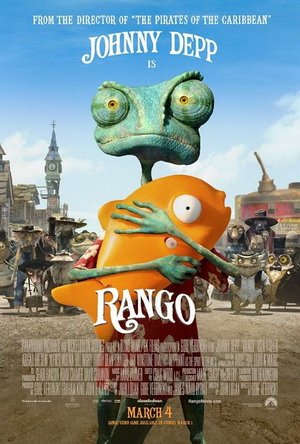
    Wounded Bird the "Crow" Indian in Rango

    This past week I had the pleasure of attending an advanced screening of the new animated film Rango.

     (c) 2010 - Paramount Pictures (source)


    Here's a good plot summary from Wikipedia:


    "Rango is a chameleon who lives in a terrarium and constantly seeks to fit in with his surroundings. He finds himself removed from his contemporary American southwest surroundings and ends up in an Old West town in the middle of the Mojave Desert called Dirt, which is populated by various desert critters garbed like characters out of Western fiction. Thinking himself a hero, Rango establishes himself as the town's sheriff, not knowing that people who have held that title do not fare very well in Dirt."


    My review for the film is available here.  I gave it 2.5 out of 4 stars:


    http://www.movieretriever.com/blog/1073/movie-review-rango


    As I write in the review:

    "The film plays like a classic Sergio Leone Spaghetti Western crossed with a Nickelodeon kid's comedy with a little Fear and Loathing in Las Vegas thrown in as well. As a Western, the movie has everything from high noon gun battles to bitter fights over water rights to the stereotypical stoic Indian who once again seems incapable of speaking in complete sentences."

    That last part refers to the character Wounded Bird.

    (c) 2011 - Paramount Pictures (source)


    In the film, Wounded Bird plays a bit part as the token town Indian.  He's quiet, mystical, and knows exactly how to track in the wilderness, just like the classic Hollywood Indian.

    That being said, he is the source of some comic relief with his one-liners and ends up being a clearly heroic figure in the end.  Then again, the bad pun where Rango refers to Wounded Bird's "ingenuity" only to say "no pun intended" put a bad taste in my mouth.

    The official film website over at http://www.rangomovie.com/ includes this description of Wounded Bird:


    "A solid creature of the Crow Nation. Wounded Bird draws his inspiration from Native American Indian principles of harmony and quiet observation. His tracking skills are legendary and he's big in Finland for some reason."


    I disagree.  Wounded Bird draws his inspiration directly from the scores of Indian depictions in countless Hollywood Westerns.  Rango is filled with every other Western cliche- saloon brawls, corrupt mayors, spineless townfolk, a mysterious stranger- so why not the quiet mystical stereotypical Indian!  It wouldn't be a true homage without one!

    Personally, I'm a fan of subverting tired cliches and stereotypes to challenge our expectations and get those cerebral juices flowing.  Rango does just that when the Beans character (voiced by Isla Fisher) subverts the traditional female role to become a gun-slinging, posse riding hero in her own right.

    So why couldn't they have done the same thing with Wounded Bird?

     
    (c) 2011 - Paramount Pictures (source)


    I wonder if writer/director Gore Verbinski ever stopped to think about the Wounded Bird character or simply threw him in as another element in this ode to the Spaghetti Western.  Considering Verbinski made his mark directing the Pirates of the Caribbean franchise, a fine trio of films full of old cliches and stereotypes, this new character shouldn't come as any surprise.  It's just another example of modern Hollywood's love affair with the classic Hollywood Indian, even if he's an animated bird in a kids comedy.

    And in case you're wondering, Wounded Bird is voiced by Gil Birmingham.  He is of Comanche ancestry and is best known for his role in the Twilight series.  I haven't heard his or anyone else's take on the character but I'm always open to other thoughts.

    <>

    Monday, February 7, 2011

    Strange Tan Blotches in South Dakota: Indian Reservations in Online Maps

    As we live our lives increasingly in the digital realm, the sights, sounds, and moving images of the Internet impact our conception of the world around us more than ever.

    Case in point are the myriad of online web mapping services.  What began as simple tools to find directions in the age before Garmins and smartphones have evolved into advanced applications that map multiple layers of data into user-friendly 2D and 3D environments.

    But who decides what we see?

    As a fan of Google Maps, I became accustomed to one set of data and a visual style that favors brevity and aesthetics over sheer volumes of information.  A few days ago, I happened to click on a link that took me to the Bing Maps website to find a location.  As is usually the case, I ended up scrolling around and exploring the United States.

    But something was different...

    Here is your standard view in Google Maps:


    View Larger Map
    Google Maps


    And here is that same view in Bing Maps:


    Bing Maps


    What were just discolored tan geometric blobs* in the first map actually have names in the second map!

    Normally, I wouldn't make such a big deal out of mere labels but when you combine the appalling state of America's geographic knowledge with American Indians' long fought battle to reassert their tribal rights and sovereignty, this is a big deal.

    Google Maps is the clear market leader among web mapping services but Bing Maps, Yahoo! Maps, MapQuest, and even open collaborative websites like OpenStreetMap are competing for a piece of the pie.  The influence of Google Maps and its visual aesthetic becomes clear however, when you consider it has even garnered its own parody:


    Even when you zoom into Google Maps, you never see a single label that identifies those strange tan blotches in South Dakota.  Among the other map services, Yahoo! Maps and MapQuest do label Indian reservations while OpenStreetMap does not.

    Thankfully, the Internet has come to the rescue and some enterprising Google Earth enthusiasts asked this very same question.  Independent modders have since created several unique layers that identify and outline Indian reservations throughout the United States.

    I can only wonder though, how many people see these very same tan blotches but never bother to answer the simple question- what are they?

    National Parks?  Military bases?  Oil fields?

    While these mapping tools certainly empower the individual, never forget it is the designers and the developers behind them who hold the real power.  I can only speculate as to why they did not include these labels, but I can be sure of one thing- their decision has impacted millions of Americans and they way understand (or don't understand) the geographic and social reality of this country.


    For a great comparison of the overall design of Google Maps, Bing Maps, and Yahoo! Maps check out this informative blog post:

    http://www.41latitude.com/post/557224600/map-comparison


    *Update:  Google has dropped Indian reservations altogether from Google Maps.  Read about it here:  The Case of the Missing Indian Reservations


    <>

    Tuesday, January 18, 2011

    The Wacky World of TV Tropes

    What makes all the mythical, romantic, and stereotypical notions about American Indians so potent and wide spread in modern America?

    While there are many answers to this question, one of the most important is simply this: sheer and utter ubiquity.  In almost every form of popular media from television to film to literature to advertising, we are constantly being bombarded with the same creative devices over and over again.  Over time they work their way into our brains and take on a whole new life as tropes.

    One of the best websites out there for understanding the power of popular media in shaping the American consciousness is TVtropes.org.  This website is a constantly expanding wikipedia style encyclopedia of tropes from creative works as diverse as video games, theater, music, and new media.  It's tongue and cheek brand of humor and casual tone certainly makes for some entertaining reading.

    tvtropes.org

    But what exactly is a trope you ask? Here is the working definition from the website:


    "Tropes are devices and conventions that a writer can reasonably rely on as being present in the audience members' minds and expectations. On the whole, tropes are not clichés. The word clichéd means "stereotyped and trite." In other words, dull and uninteresting. We are not looking for dull and uninteresting entries. We are here to recognize tropes and play with them, not to make fun of them."


    The website includes innumerable examples relevant to Drawing on Indians and I have excerpted some of them here.  Be sure to click on the link and  scroll down to see just how ubiquitous these tropes are across the media world (and feel free to add any new ones):


    Indian Burial Ground


    "A common cause for supernatural goings-on in America, commonly seen in movies: A house is haunted or Cursed due to being built on an Ancient Indian Burial Ground. The disturbed spirits of the ancients of the land then enact their bloody vengeance against those who wake them by turning off the lights, making hooting noises, creating flies and maybe, if they feel up to it, killing people."


    Noble Savage


    "A character who is portrayed as nobler or of higher moral fibre than the norm, due to their race or ethnicity, which is that of a barbaric or savage tribe. (Often regarded as living the Good Old Ways). The savages in question are quite often American Indians, so you could probably call them Mary Sioux. Rare nowadays, except as a Sci Fi alien- though it has made something of a comeback with the idea of Magical Native American people being more in tune with nature than the greedy white people."


    Going Native


    "There are plenty of people who believe that modern life is rubbish and would like to escape it and go live off the fat of the land. The Going Native trope plays to this fantasy by having a character lifted out of his typical environment and thrust into a new one, only to become a part of that new world. "


    Injun Country


    "American Indians (also Red Indians, Native Americans, Amerinds, or First Nations) discovered America by walking across a gigantic land bridge from Russia into Alaska. For a few thousand years they just took up space until Europeans rode massive wooden buckets across the ocean and crashed into the eastern shore. After a friendly 'getting to know you' dinner party, the killing started, and lines were drawn between the Civilized World and Injun Country."


    Magical Native American


    "After centuries of various atrocities (smallpox, Columbus, Custer, the Trail of Tears) perpetuated against "the savages", white people finally came to realize that Native Americans have rich identities and cultures. Furthermore, Native American tribes have their own rich and varied beliefs, many of which hold close to the idea of the value of everything on the earth...Of course, many non-Natives, especially those Hollywood types, saw a complex faith with a focus on ritual and spirits and broke it down to "magic." So, whenever someone needs to bring in a spirit guide, or magical superpowers, they bring in the Magical Native American."


    Badass Native


    "Indigenous people tend to be, well, poor. Indigenous people also have a tradition of war, unlike the rest of the world. So of course they're badasses. No matter what era, you're in, if you live in the United States, Canada, New Zealand, or Australia, indigenous people will be badasses. Rarely seen in the rest of the world, though. The American version of the Badass Native has costuming and prop elements as well. Note that this is Always Male, will often be magical. Overlap with Noble Savage."


     Mighty Whitey 


    "A common trope in 18th and 19th century adventure fiction, when vast swathes of the world were being explored and properly documented by Europeans for the first time, Mighty Whitey is usually a displaced white European, of noble descent, who ends up living with native tribespeople and not only learns their ways but also becomes their greatest warrior/leader/representative. Extra points if he woos The Chiefs Daughter along the way."


    The Chief's Daughter


    "Even in Darkest Africa, Injun Country, or the land of Wild Samoans, Everythings Better With Princesses. The Chief's daughter, in her Fur Bikini or Braids Beads And Buckskins, is often the first to greet or trust Mighty Whitey during his visit to the strange new land. She'll be inexplicably beautiful by Western standards with just enough racial traits to be exotic, and will be a Noble, Nubile Savage compared to the rest of her Barbarian Tribe, and a Friend To All Living Things."


    Mayincatec


    "Under Hollywood History, all historical Central/South American nations are lumped into one exotic and barbaric people: the Mayincatec, featuring aspects of the Maya, Inca and the Aztecs, plus many others. It's a salad of exciting bits from all their histories, with a topping of myth and fiction. And the dressing is blood."


    Want to see these TV tropes in action?  Well, there isn't a better example out there than the famously flawed 1995 Disney animated film Pocahontas.

    One of the best critiques is from regular TVtropes.org contributor The Nostalgia Chick.  Her silly comments and sharp wit add a touch of humor to what could otherwise be a very dry subject.  She also created a video critique of Pocahontas which you will find below:


    Part 1 of 2:


    Part 2 of 2:  (scroll ahead to 3:38 for the most disturbing Disney movie line ever)


    To conclude as only The Nostalgia Chick can:


    "And hopefully now we're all a little less educated on our own history. And the movie leaves us with questions like, 'Why are there moose in Virginia? Where did all those majestic cliffs go in the interim 500 years? Why doesn't listening with one's heart bridge language gaps anymore? Why does Pocahontas lack a real nose — was she really fathered by Lord Voldemort?' Really, it's best not to think about it — the great mouse in the sky certainly doesn't want you to."


    For more on Pocahontas, check out this previous post:

    Portraying Pocahontas: or the Not-So-Modern Origins of the "Sexy Indian Princess"


     <>